Counter-spell (2025)
Denilson Baniwa
By projecting the phrase “Aqui é terra indígena” [“This is indigenous land”] onto the facades of towering skyscrapers in the city of São Paulo or in an art gallery in Lisbon, Denilson Baniwa manifests the power of contemporary indigenous art and its counter-spell gestures, signalling and confronting messages from the colonial past with the current debates and public space.
In his first solo exhibition in Lisbon, at Quadrum Gallery, the Baniwa artist, born in the Upper Rio Negro (Amazonas, Brazil), presents an unprecedented retrospective of his work, as well as a set of new pieces produced in the Portuguese capital. Widely recognised internationally, his work multiplies languages and crosses painting, performance, drawing and digital intervention to challenge and question hegemonic narratives about territory and identity, asserting his right to respond.
The invitation to present this exhibition was issued by Terra Batida, a platform that, over the last two years, has been dedicated to researching collections from indigenous communities in Brazil held in museums and historical and ethnographic archives in Lisbon and Coimbra. To this end, it awarded creative grants and fostered collaborations with leading voices in contemporary indigenous art and thought, such as Brisa Flow, Ellen Pirá Wassu, Juão Nyn, Lilly Baniwa, Olinda Yawar Tupinambá and Ziel Karapotó, who visited these collections in person.
Denilson Baniwa’s “Contra-feitiço” [Counter-spell] inaugurates a gesture of public sharing of a long journey of dialogue and critical reflection on the institutional policies of disappearance, conservation, and memory that traverse and connect Brazil and Portugal.
OPENING
On 22 October, the exhibition opening will feature a show-performance-ritual by Brisa Flow. The event will also host the presentation of the programme for the Alkantara Festival 2025, co-producer and regular partner of Terra Batida.
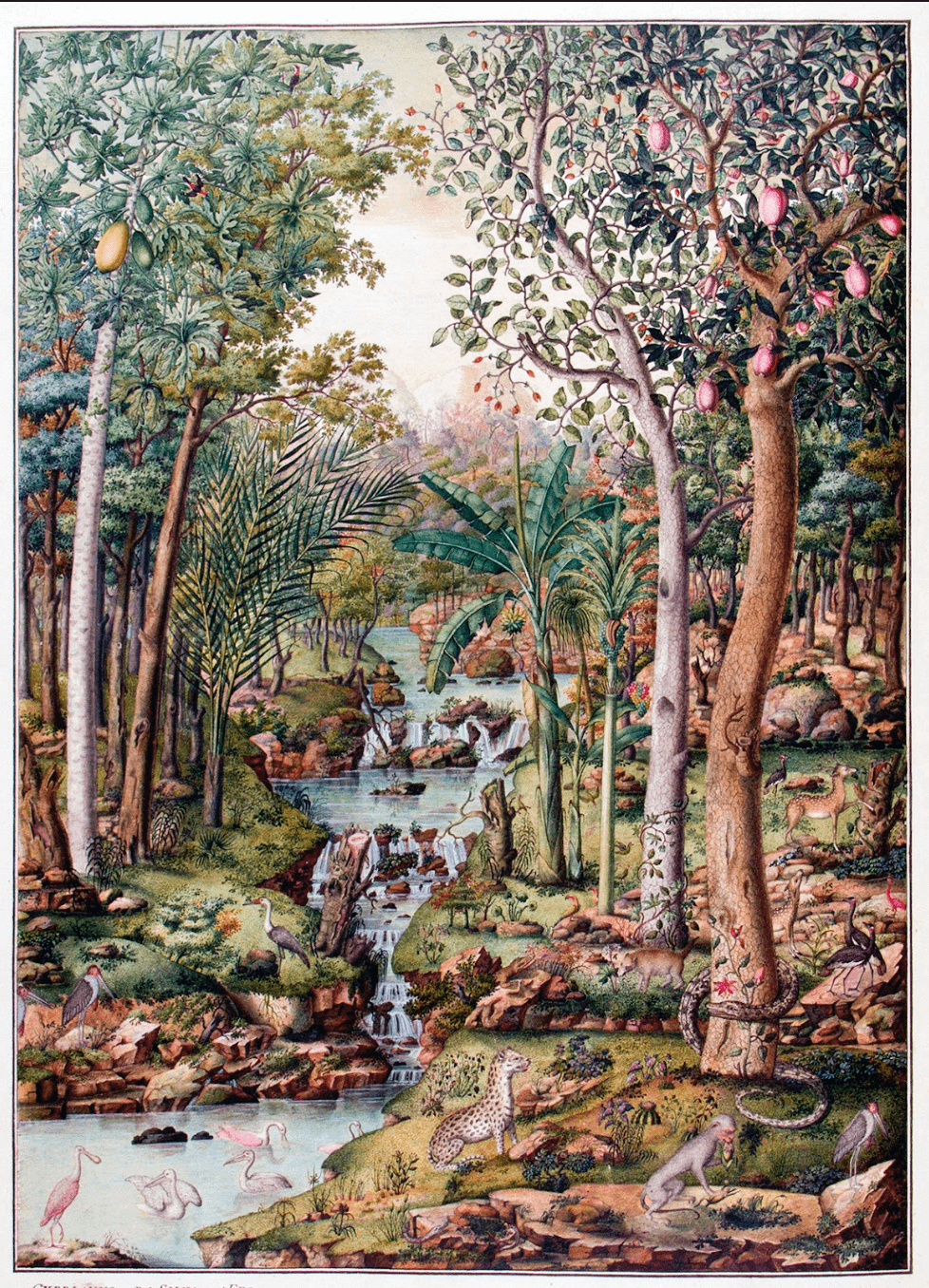
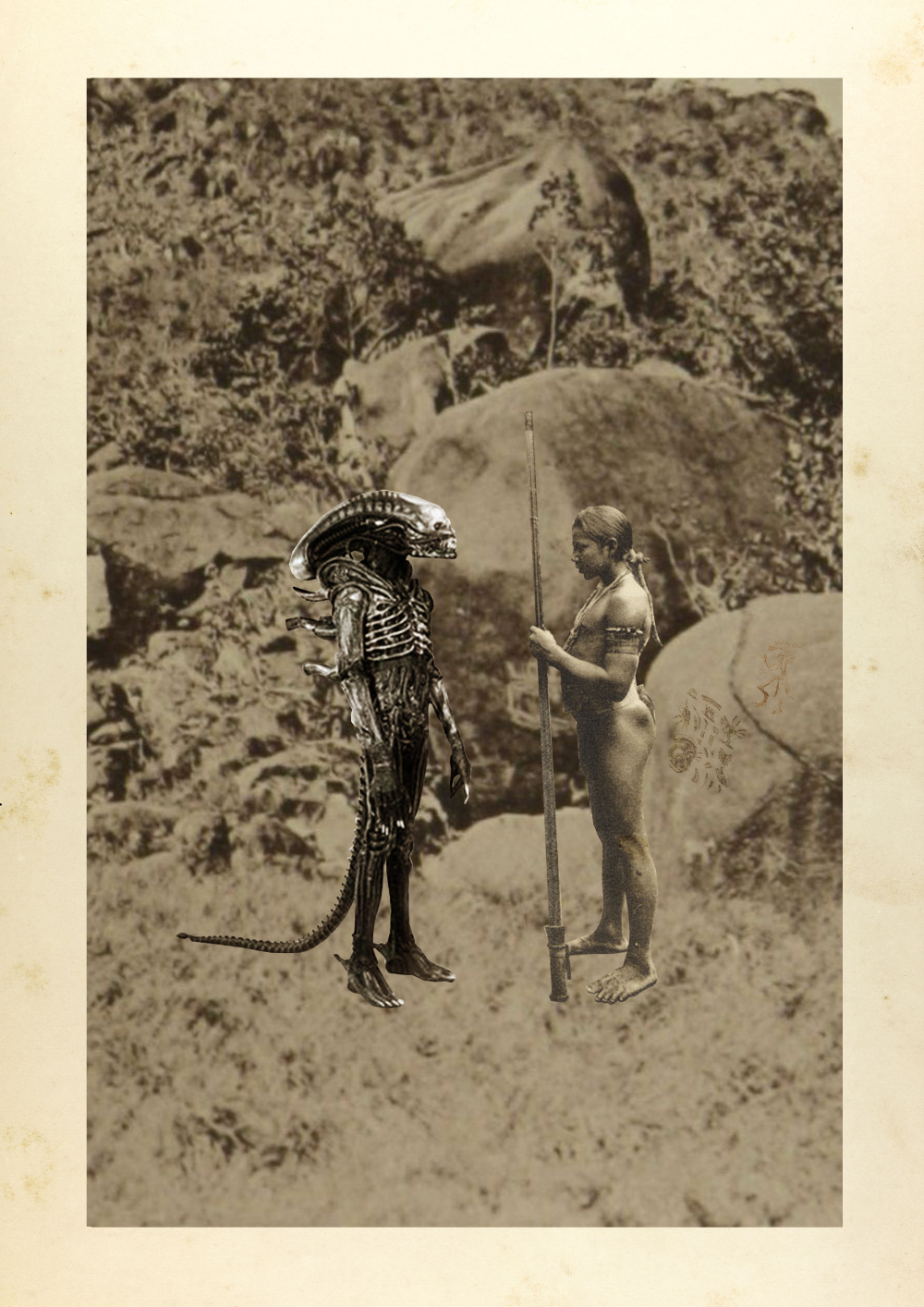
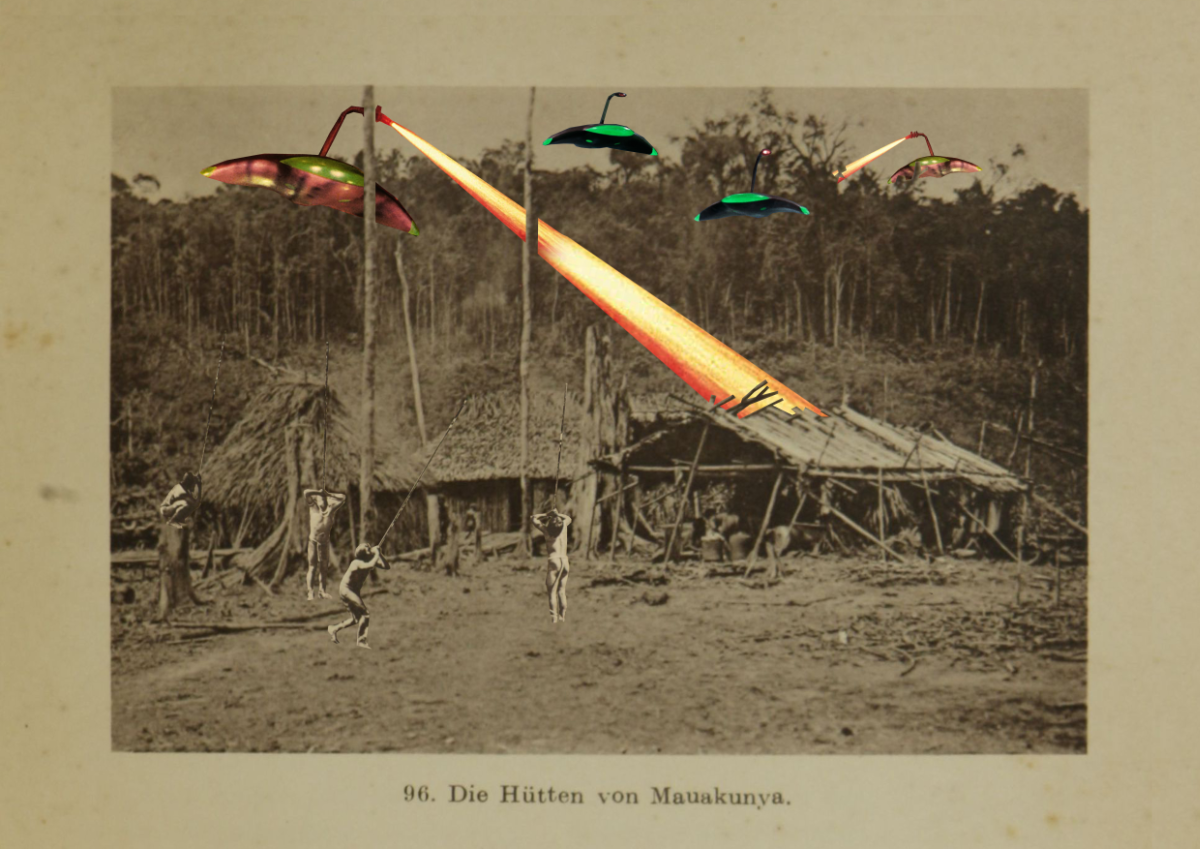
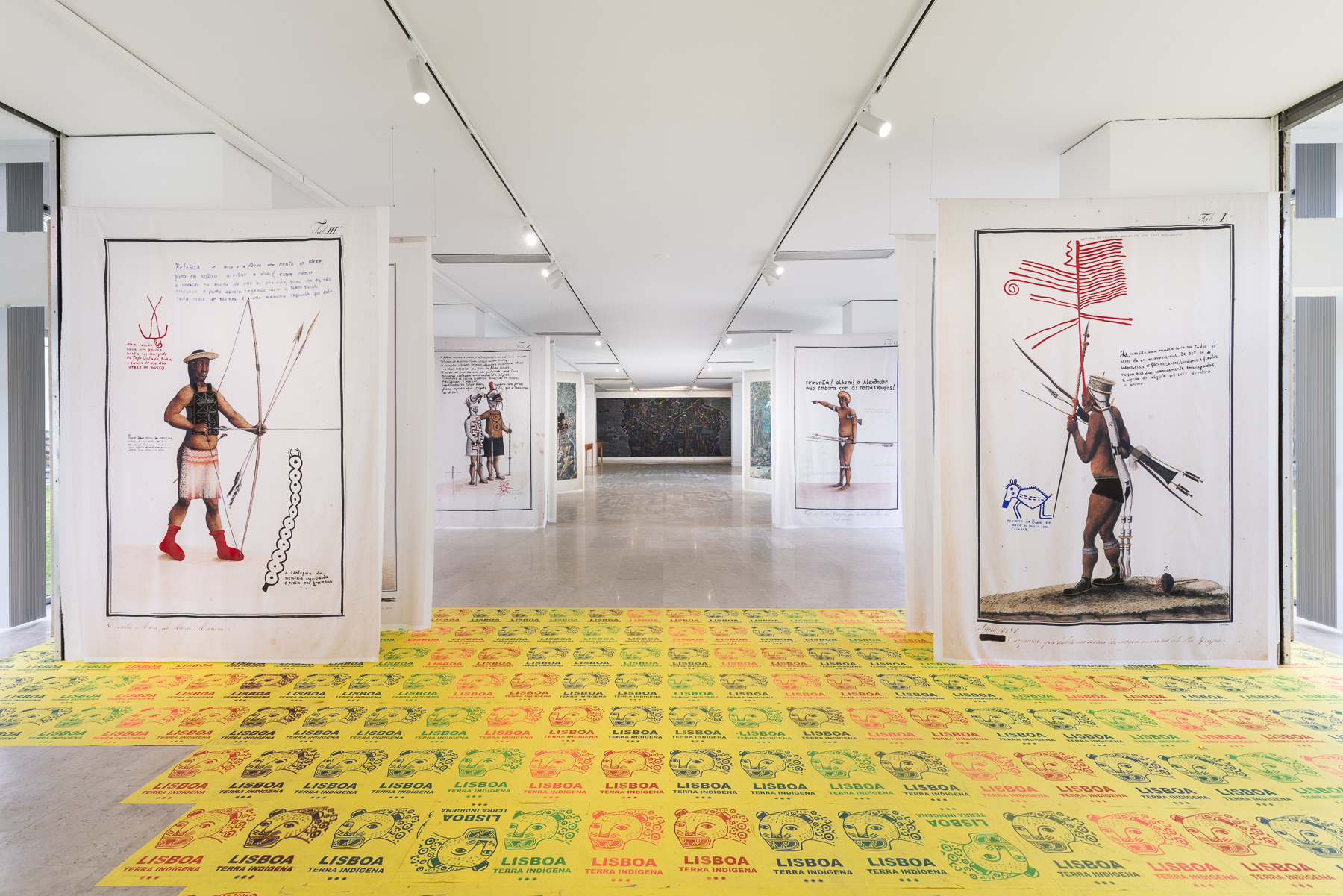
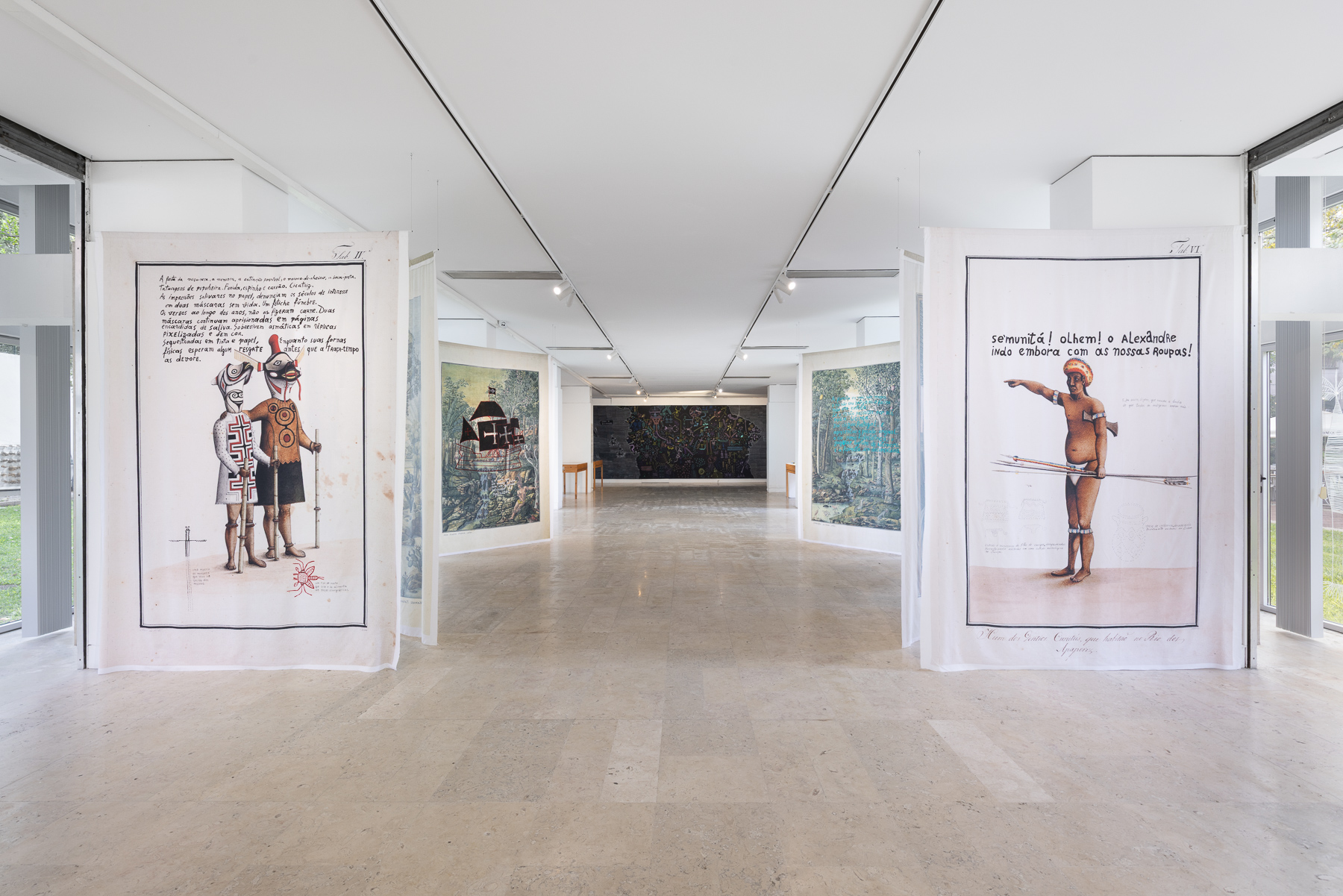
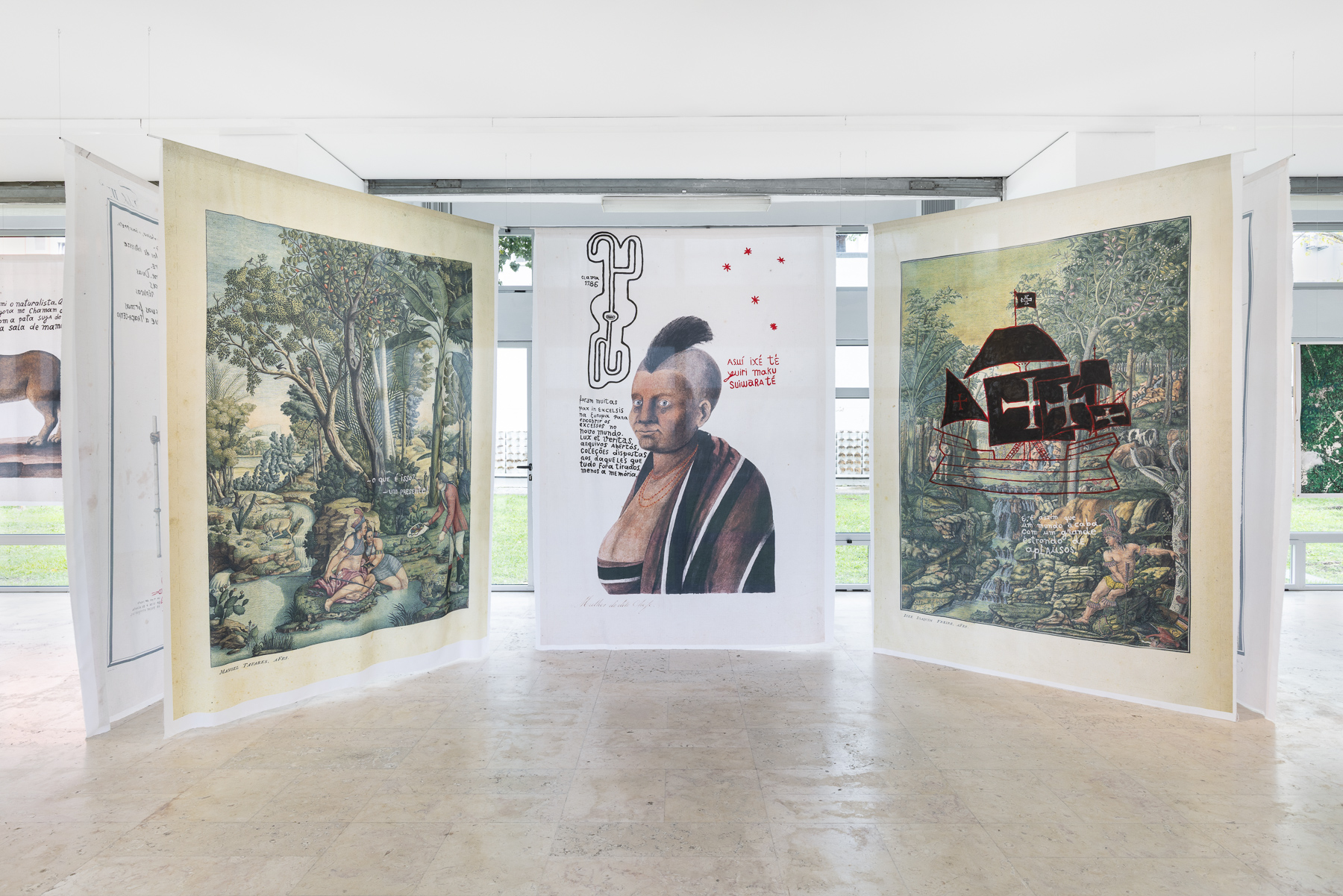
terrabatida.org/intervencoes_one.php?id=29
⌂ TECHNICAL INFO
An exhibition by: Denilson BaniwaCurated by: Laila Algaves Nuñez and Rafaela Campos
In collaboration with: Museu Calouste Gulbenkian
– Coleção Moderna
Show-concert-ritual (vernissage) by: Brisa Flow
Performance programme: Nosso Wayuri (Alkantara Festival) with Ellen Pirá Wassu & Ritó Natálio, Juão Nyn, Lilly Baniwa, Olinda Yawar Tupinambá & Ziel Karapotó
Curatorial research (2024): Ellen Pirá Wassu and Ritó Natálio
Dialogues in residence: António Gouveia, Associação Batoto Yetu Portugal, Carla Coimbra, ECO - Animals and Plants in Cultural Productions about the Amazon Basin, Jamille Dias, Karen Shiratori, Neil Safier, National Museum of Ethnology, National Museum of Natural History and Science, Science Museum of the University of Coimbra, National Archive of Torre do Tombo
Technical direction: Ricardo Pimentel
Exhibition design: Ricardo Pimentel, Denilson Baniwa and Ritó Natálio
Images: Violena Ampudia
Additional images: Olinda Yawar Tupinambá, Ziel Karapotó, Jamille Dias, Laila Algaves Nuñez, Ritó Natálio
Video editing: Ian Capillé
Graphic design for exhibition design: Nayara Siler
Graphic execution: Juvenália & Sá (sublimation, “Rasuras”), Gracal – Gráfica Caldense (brochure, “Fera Utopia”), Câmaras & Companhia (slides, “Hunters of Colonial Fictions”), Mago Studio (risography, “Aqui é Terra Indígena”), Viragem Lab (photographs, “Primeiro Contato”)
Construction of complementary equipment: Fernando Travassos
Loans: National Museum of Ethnology, National Museum of Natural History and Science, Science Museum of the University of Coimbra
Production: Parasita Association
Co-production and hosting: Alkantara Festival, Municipal Galleries / EGEAC
Head of production: Catalina Lescano / Parasita Association
Administrative support: Helena Baronet / Parasita Association
Support for Denilson Baniwa's exhibition: The PIPA Foundation
Partnership: EDGES – Entangling Indigenous Knowledges in Universities
Acknowledgements: Carla Coimbra, Lysandra Domingues, Jamille Dias, Marta Lourenço, Mafalda Santos, Origami produções