Our Wayuri 2025
Lilly Baniwa, Ellen Pirá Wassu & Ritó Natálio, Olinda Tupinambá & Ziel Karapotó, Juão Nyn
Wayuri is a gesture of collective creation, or simply of doing something together. The choice of a word from the Nheengatu language, a general Amazonian language based on Tupi, which was banned in the 18th century by Marquês de Pombal for being a threat to the imposition of the Portuguese language, celebrates the unifying force and reinvention of contemporary indigenous art. A joy of doing things together, of bringing together the multitude of indigenous languages, voices, lives and biomes that meet and resist the structural sedimentation of colonial violence between Portugal and Brazil.
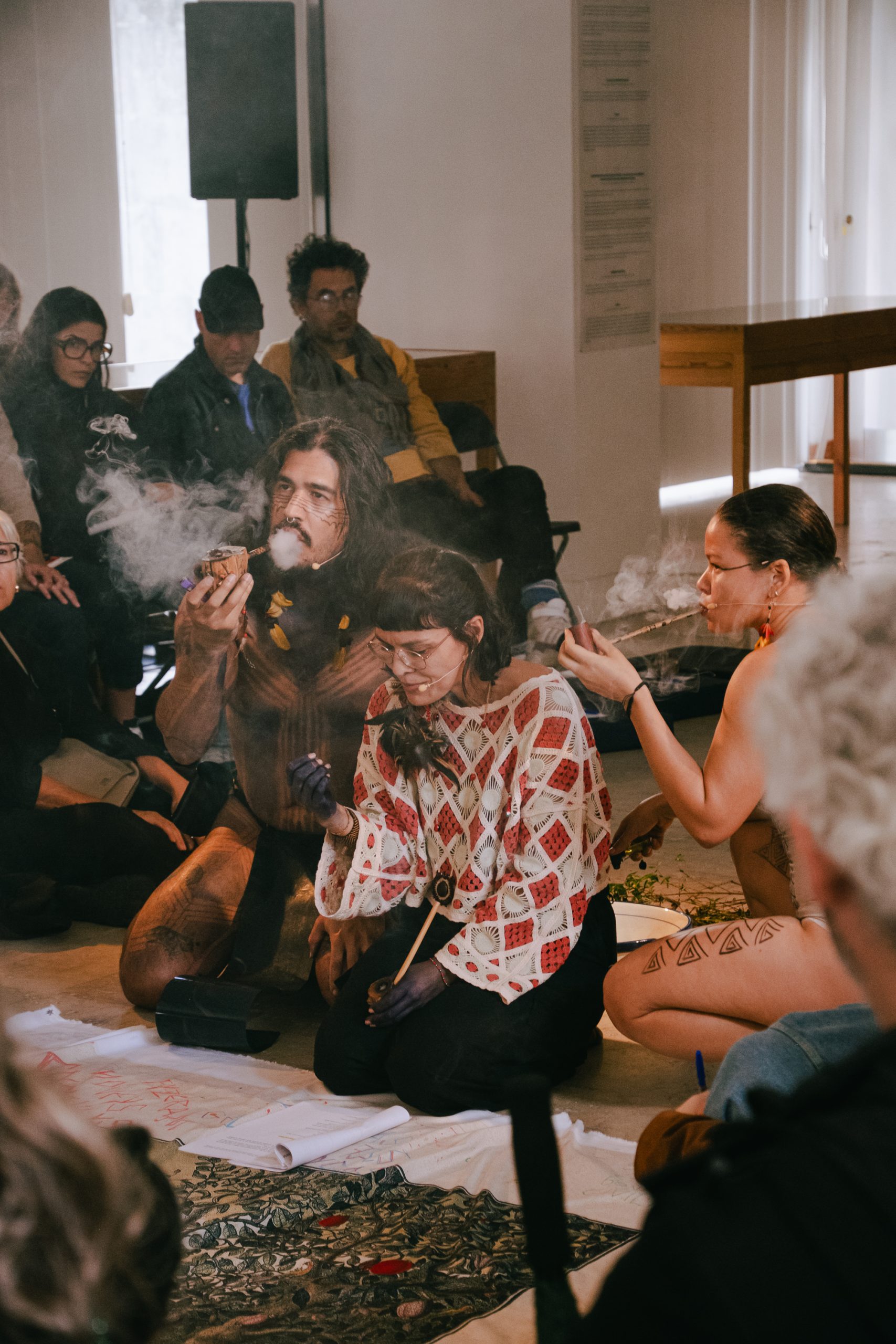
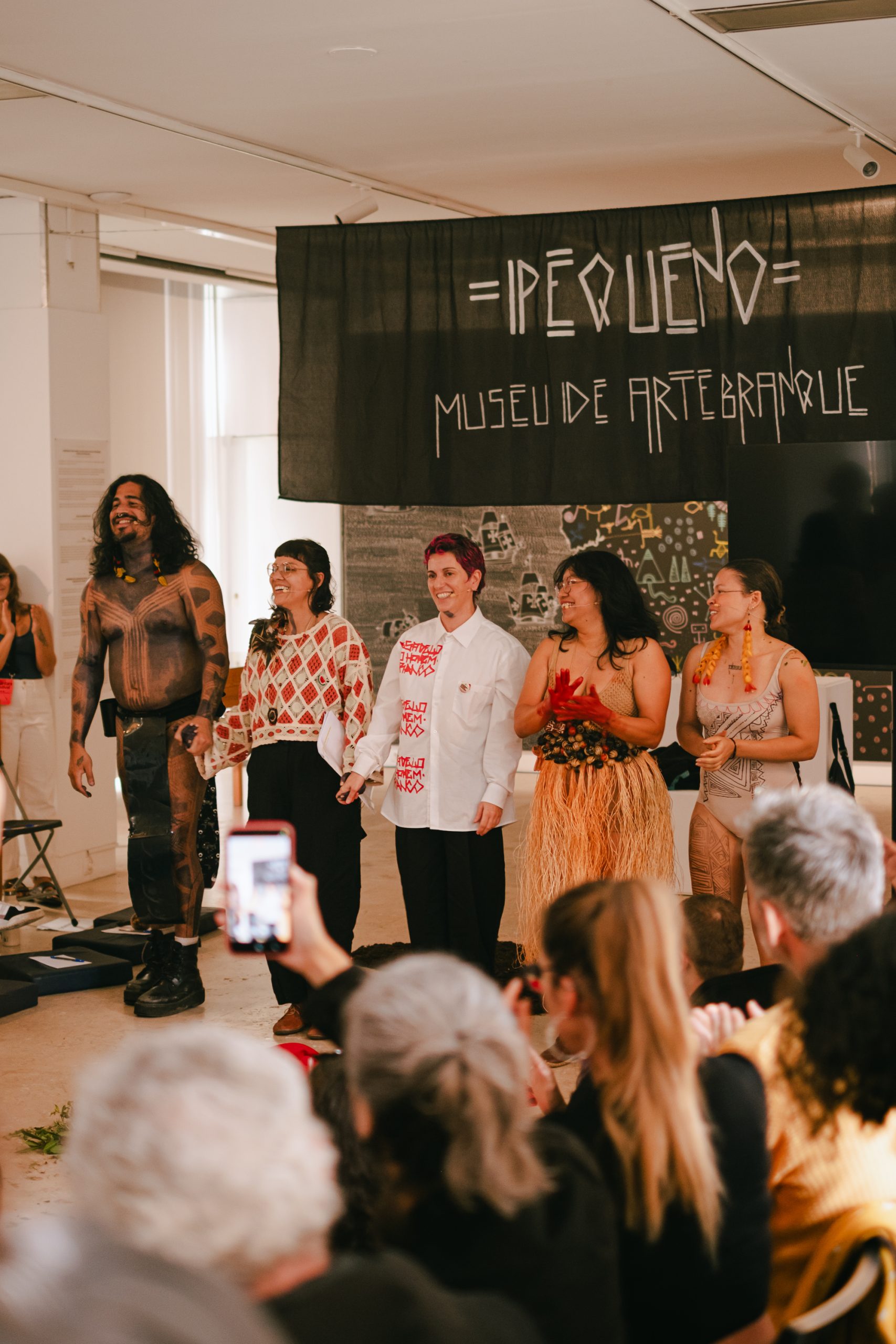
‘Our Wayuri’ brings together Lilly Baniwa, Ellen Pirá Wassu & Ritó Natálio, Olinda Tupinambá & Ziel Karapotó and Juão Nyn in the retrospective exhibition space of artist Denilson Baniwa, collectivising it. The programme proposes an afternoon gathering and is the result of a research process convened by the Terra Batida platform, which aims to deconstruct notions of ecology in the face of intertwined visions and responsibilities. The research, which lasted about two years, was marked by residencies of encounter, investigation, and creation with indigenous artists in historical and ethnographic museums in Lisbon and Coimbra, thinking about strategies of coexistence, response, and care.
In this collective performative encounter, different performative actions and gestures are woven together, and combined with the works of Denilson Baniwa.
Between poetry and performance, excerpts will be read from ‘Cartas do Fogo’ (Fire Letters), a curatorial and artistic collaboration between Ellen Pirá Wassu and Ritó Natálio, which invites an experience of transmutation and digestion of the encounter with these historical collections, a dialogue around processes of deforestation and institutional policies of disappearance, conservation and memory, applied to Brazilian and Portuguese territory.
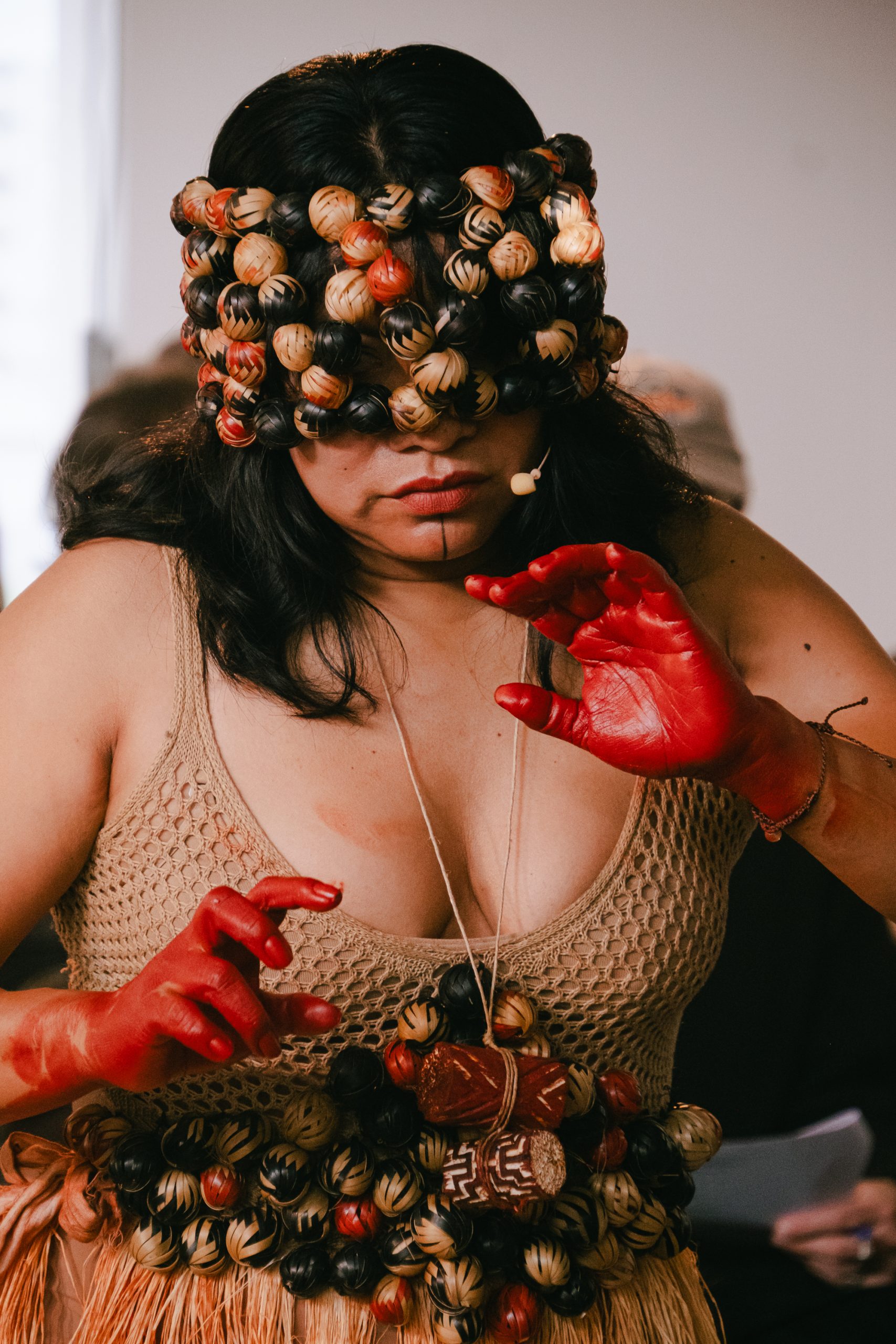
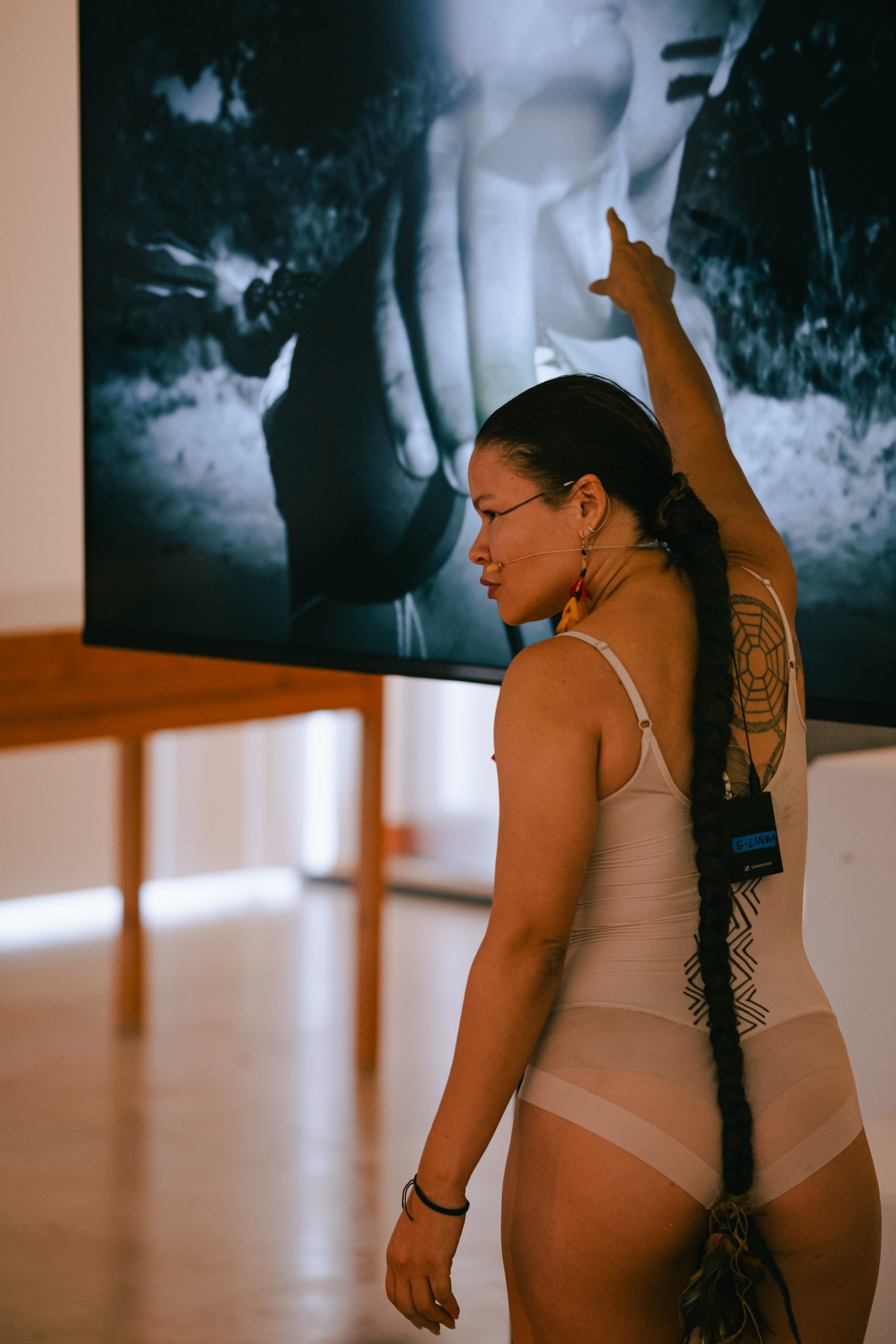
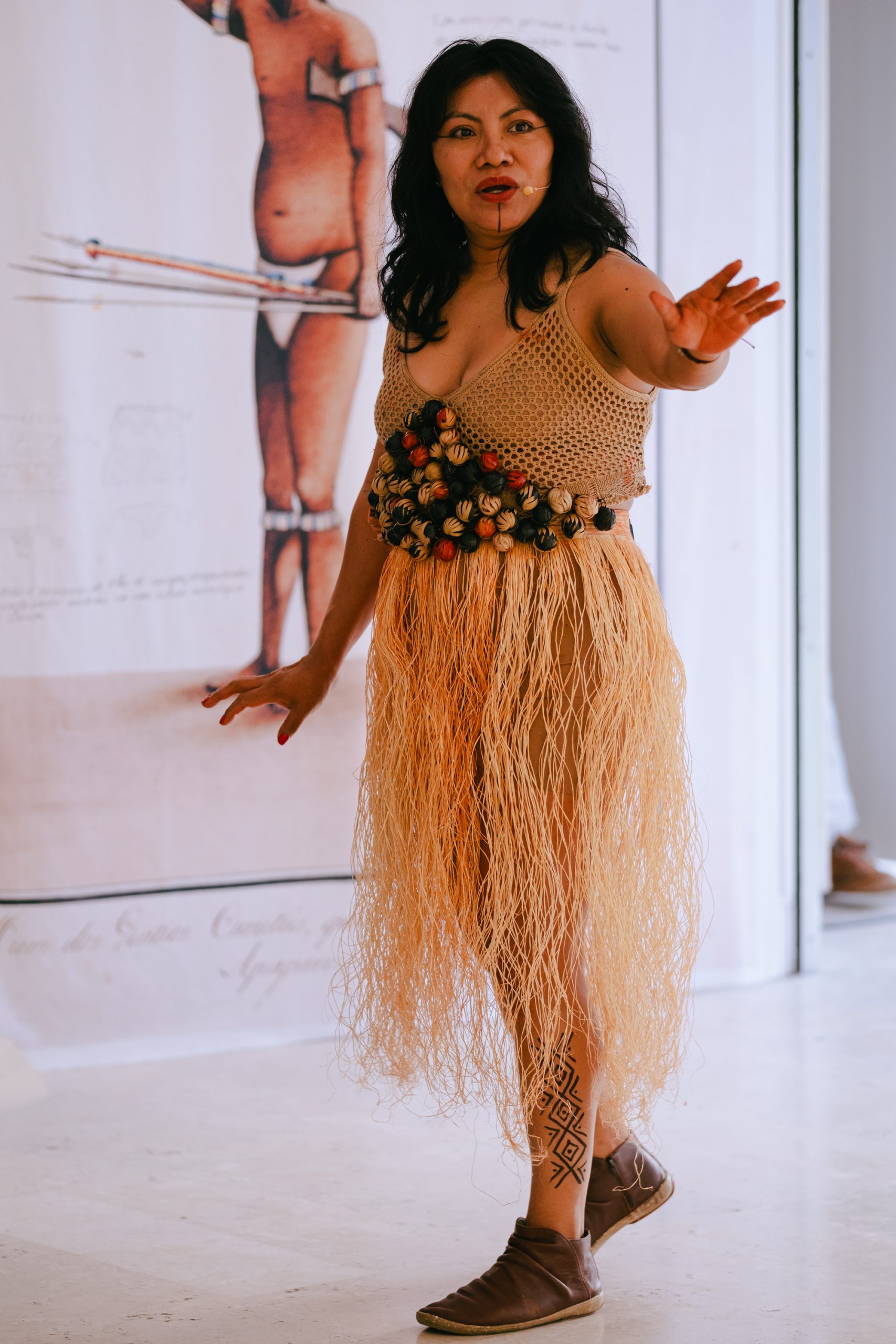
Another perspective is that of the path or return, as indicated by the word in Baniwa ‘diakhe’, which names the performance by actress Lilly Baniwa, from the Upper Rio Negro. In the artist’s words, ‘between waters and memories, the diakhe calls: a path of return, where ancestral territories and knowledge meet to weave healing and connections, breaking the silence imposed on the sacred objects that carry our stories.’
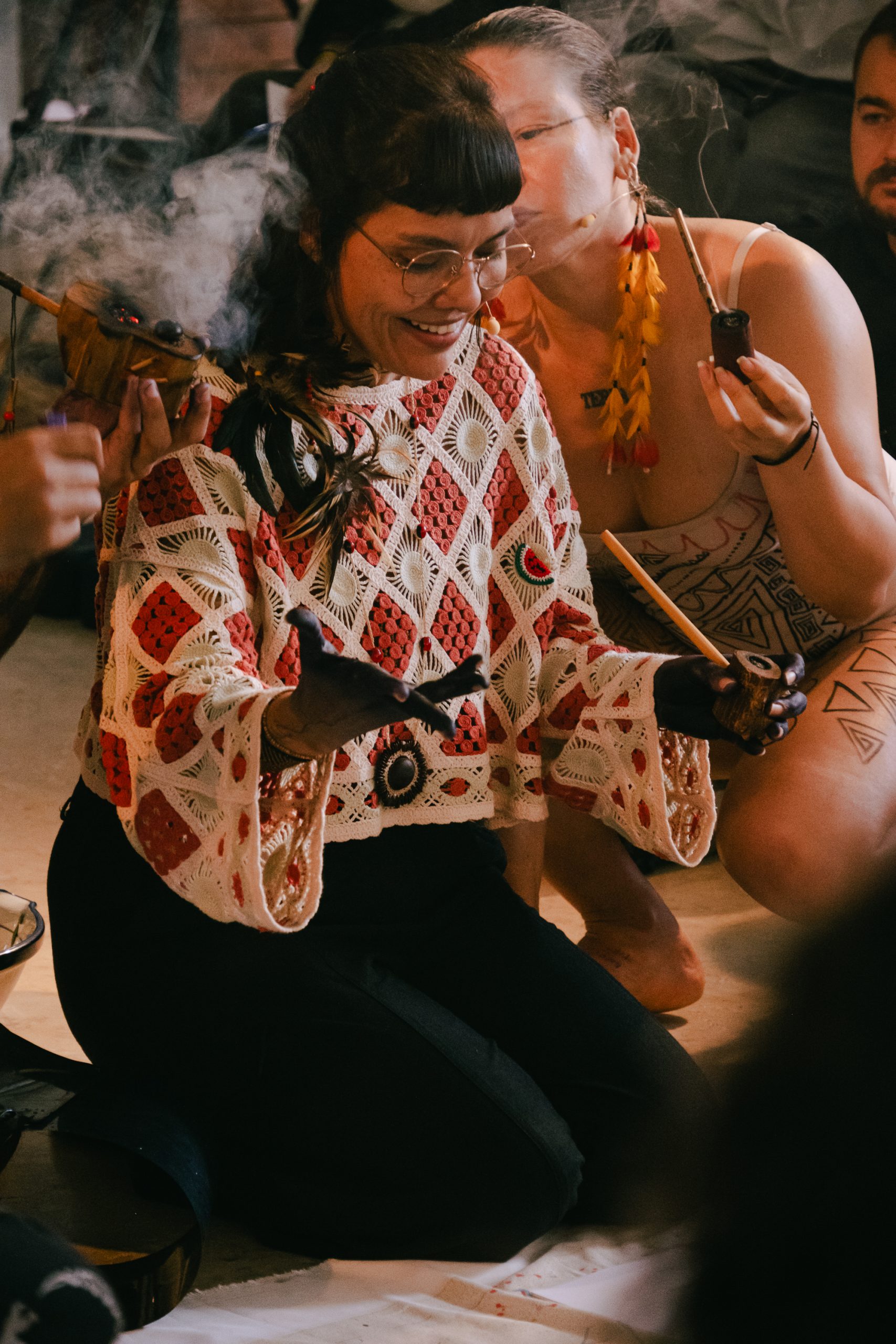
‘Contra-feitiço a escrita maldita’ (Counter-spell to the cursed writing) is a response by Olinda Tupinambá and Ziel Karapotó to the artists’ face-to-face encounter with Pêro de Vaz de Caminha’s letter, dated 1 May 1500, at the National Archives in Torre do Tombo. Olinda and Ziel will perform a ritual using their bodies as territories, establishing a counter-narrative to the first Portuguese descriptive writing about the indigenous peoples of Brazil, in order to undo the coloniser’s gaze on the original peoples. Together, they will invoke a scenario of competing narratives, of tension between the visible and the invisible, the said and the unsaid. Olinda and Ziel will imprint stories recorded long before the arrival of the Portuguese caravels, marks that span centuries and flourish in the present. Past, present and future intertwine, and history is finally questioned, retold and rewritten with indigenous protagonism and authorship, by those who have always lived it.
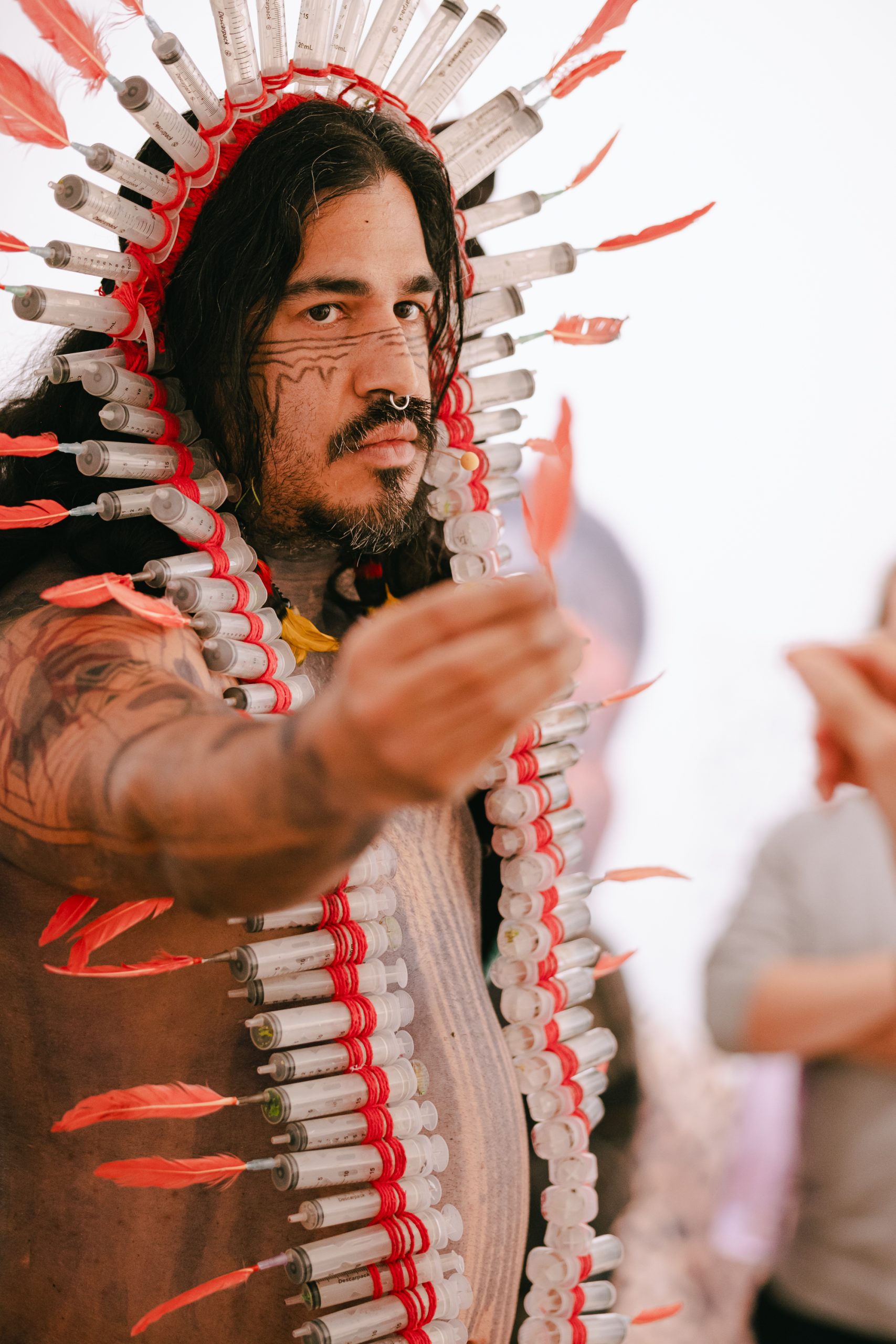
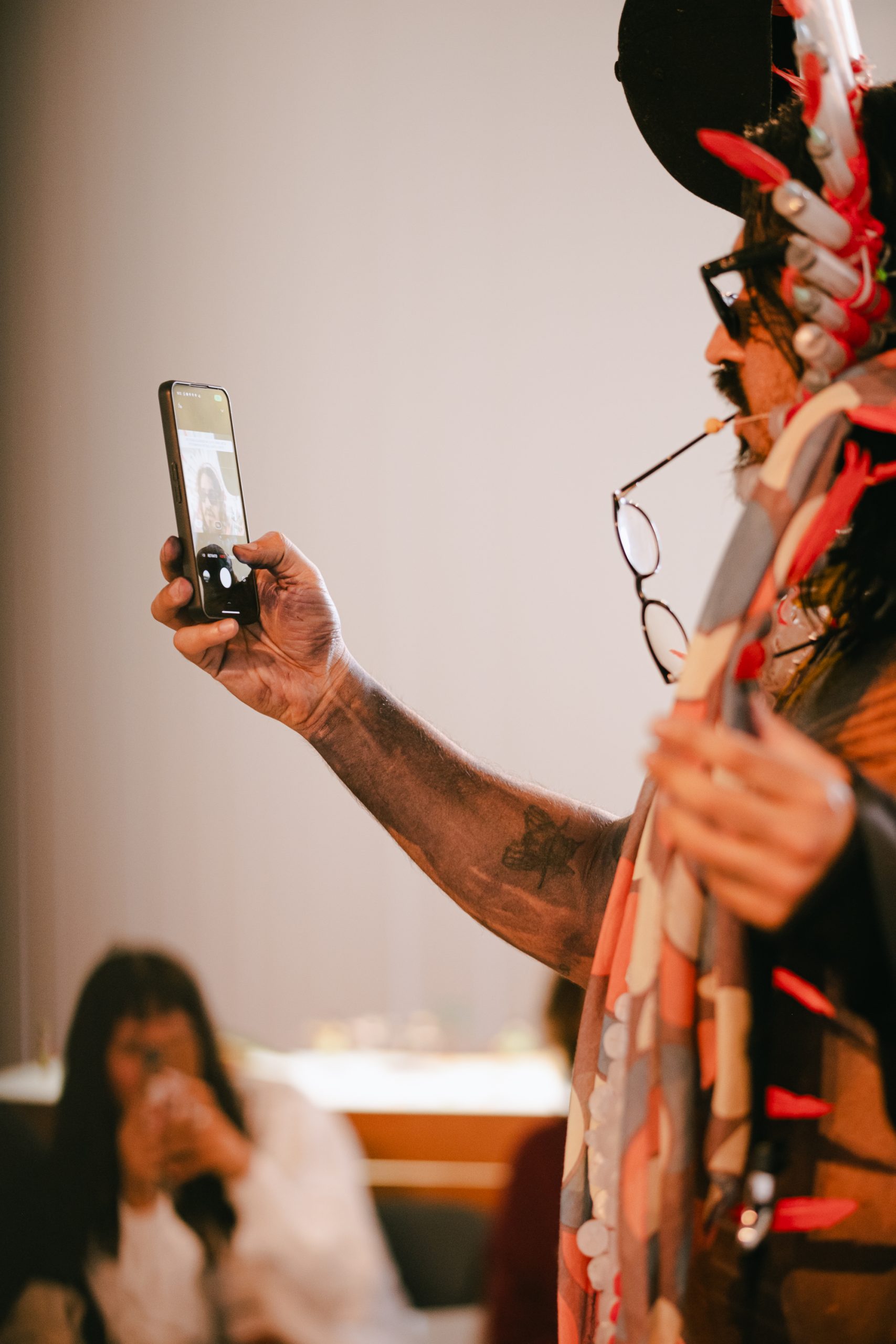
Finally, as an offshoot of his previous work, ‘Contraxawara’, artist Potyguara Juão Nyn proposes a performative action entitled “Branqueologya”, a reperformance of the first contact between the ‘white man’ and the native peoples of Abya Yala. ‘What exchanges still need to be (un)done?’ asks the artist.
The ‘Our Wayuri’ programme also includes a conversation with the audience and a video installation presenting the research process carried out by this group of artists in museum collections — at the National Museum of Ethnology, the National Museum of Natural History and Science, the National Archives of Torre do Tombo, the Academy of Sciences and the Science Museum of the University of Coimbra.